
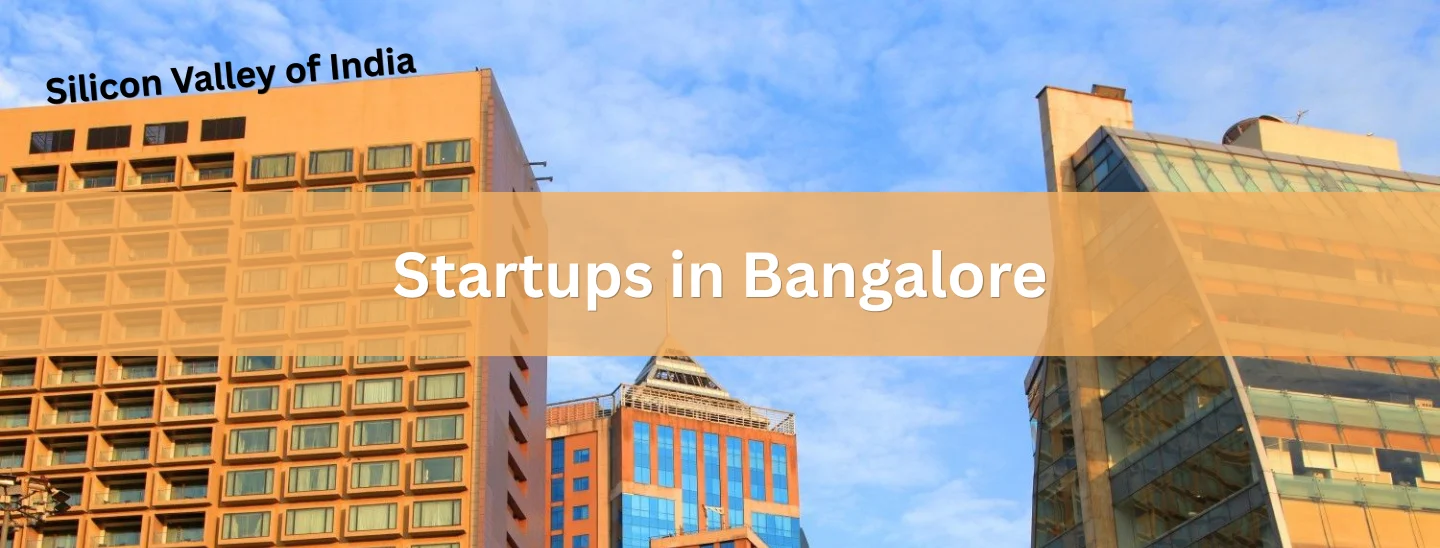
Bengaluru isn’t just India’s Silicon Valley anymore in fact, it has grown into one of the most important startup ecosystems on the planet. Bangalore is the home to 26 unicorns valued at over $70 billion, ranked #14 globally in the Startup Genome Index, and pulling in nearly half of India’s entire startup funding, Bangalore in 2026 is firing on all cylinders.
From quick commerce to deep tech, the city’s founders are building companies that are reshaping how India and increasingly the world lives, works, and moves.
Whether you’re a founder looking for inspiration, an investor tracking the next wave, or simply someone following India’s startup story, we have put together the 11 Bangalore startups that are defining 2026. So, without further ado, let’s dive in.
Startups in Bangalore defining 2026
1. Zepto
Zepto didn’t invent quick commerce, but they’re dominating it. Built on a hyperlocal dark-store model, Zepto promises 10-minute grocery delivery and actually delivers on it. Founded by Aadit Palicha and Kaivalya Vohra while they were teenagers, Zepto has grown from a scrappy experiment to one of India’s most-watched IPO candidates. Currently valued at $5 billion, the company is pushing hard on EBITDA improvement as it gears up for a potential listing. Watch this space.
Why it matters for 2026: Zepto is rewriting consumer expectations around grocery retail. Their ability to turn operational scale into profitability will be one of India’s defining startup stories this year.
2. Rapido
Rapido started as a bike taxi app but has evolved into a full urban mobility platform. With a $2.3 billion valuation and backing from Prosus, Rapido is aggressively expanding its auto and cab categories beyond its bike-taxi roots. The company has cracked affordability-first positioning in Tier-2 and Tier-3 cities — a segment the Ola-Uber duopoly has historically underserved. In 2026, with IPO conversations swirling, Rapido is the mobility story to follow.
Why it matters for 2026: Rapido’s low-cost, high-frequency model is perfectly timed for India’s mass-mobility moment — and its expansion playbook is a blueprint others are copying.
3. Ather Energy
Ather Energy is arguably India’s most credible electric two-wheeler company. With a charging network called Ather Grid boasting over 14,000 chargers across the country, Ather isn’t just selling scooters. It’s building EV infrastructure. Backed by Hero MotoCorp and ranked among India’s most-funded startups in 2026, Ather is positioned at the center of India’s energy transition. Its focus on premium product quality sets it apart in a category prone to cutting corners.
Why it matters for 2026: With government EV mandates tightening and consumer adoption accelerating, Ather is India’s clearest pure-play EV bet in the two-wheeler segment.
4. Groww
Groww was built on one insight: investing in India was too complicated for the average person. The platform cut through the noise with a clean, jargon-free interface for mutual funds, stocks, and ETFs. With over 10 million active investors and a Series F under its belt, Groww is now one of India’s largest retail investment platforms. In 2026, it’s actively working on a “reverse flip” moving its domicile back to India in preparation for a domestic IPO listing.
Why it matters for 2026: Groww represents the mainstreaming of retail investing in India. Its IPO will be a landmark moment for Bengaluru’s fintech ecosystem.
5. CRED
CRED is proof that premium positioning works in India. Built initially around rewarding credit card users for on-time payments, CRED has since evolved into a broader financial platform covering rent payments, P2P lending, and even vehicle finance through CRED Garage. Founder Kunal Shah’s relentless focus on “high-trust, high-quality” users has created one of India’s most coveted consumer brands. CRED continues to be one of Bangalore’s most strategically interesting companies.
Why it matters for 2026: CRED’s evolution from rewards app to financial OS for India’s creditworthy consumer class is one of the most ambitious pivots in Indian fintech.
6. Darwinbox
Darwinbox is the rare Indian SaaS company that is beating global giants on their home turf. Its cloud-based HR platform covers hiring, payroll, performance, and employee engagement and it’s winning enterprise deals across Southeast Asia and the Middle East. Backed by Salesforce Ventures and Tiger Global, Darwinbox is positioning itself as Asia’s answer to Workday. In 2026, its global expansion is the big story.
Why it matters for 2026: Darwinbox is building the thesis that Indian SaaS companies can own global verticals, not just serve as cheaper alternatives to Western tools.
7. Navi Technologies
After co-founding Flipkart, Sachin Bansal didn’t slow down, he built Navi. A full-stack financial services company offering mutual funds, health insurance, home loans, and personal loans, Navi’s ambition is to make financial services as simple as using an app. What gives Navi an edge is Bansal’s credibility and Navi’s willingness to take long-term bets on unit economics in categories others have abandoned.
Why it matters for 2026: Navi’s insurance and lending segments are hitting scale at a time when profitability in fintech is finally being rewarded by investors.
8. LeadSquared
LeadSquared is the kind of company that doesn’t make noise — it just ships. A sales and marketing automation platform built specifically for high-velocity B2B sales teams, LeadSquared counts healthcare networks, edtech giants, and financial institutions among its clients. With a unicorn valuation and strong ARR growth, it’s one of Bengaluru’s most profitable SaaS businesses. Its deep focus on verticals like education and healthcare gives it an edge that horizontal CRMs struggle to replicate.
Why it matters for 2026: LeadSquared is a masterclass in B2B SaaS done right — profitable, focused, and expanding globally without chasing hype.
9. Jumbotail
Jumbotail is solving one of India’s most stubborn supply chain problems: getting FMCG goods from manufacturers to the country’s 12 million kirana stores efficiently. Its B2B marketplace and embedded fintech (J Score for kirana credit) give small retailers tools they’ve never had before.
After acquiring Solv, Jumbotail significantly expanded its merchant base. In an era where kirana stores are fighting for survival against quick commerce, Jumbotail is arming them with the infrastructure to compete.
Why it matters for 2026: The kirana supply chain modernisation is a massive, durable opportunity and Jumbotail has the deepest moat in the space.
10. Sprinto
Compliance certifications like SOC 2, ISO 27001, and GDPR have traditionally been expensive, slow, and painful for startups. Sprinto automates the entire process — connecting to a company’s existing cloud infrastructure and making audit readiness near-continuous. As Indian SaaS companies expand globally and face increasing compliance demands from enterprise clients, Sprinto’s timing is perfect. It’s quietly become a default in the startup stack.
Why it matters for 2026: Every SaaS company going upmarket needs compliance automation. Sprinto is becoming the category-defining tool in a space that’s only getting more important.
11. Pixxel
Pixxel is building India’s most advanced hyperspectral earth-observation satellite constellation. Its satellites can detect details invisible to conventional imaging crop health, oil spills, mineral deposits creating data products for agriculture, defence, and environmental monitoring. Bangalore is fast emerging as India’s space-tech capital, and Pixxel is the city’s most watched name in the sector. With global customers already signed and NASA partnerships in place, Pixxel is thinking planetary scale from Day 1.
Why it matters for 2026: Space tech is the next frontier for Indian deep-tech investment, and Pixxel’s hyperspectral edge gives it a genuinely differentiated global proposition.
FAQs
Zepto is widely considered Bangalore’s hottest startup in 2026, valued at $5 billion and one of India’s strongest IPO candidates.
Bangalore has over 13,000 registered startups as of 2026, making it India’s largest startup hub by volume.
Yes. Bangalore is the Silicon Valley of India.
Groww, Zepto, and Rapido are the top Bangalore startups expected to go public in or around 2026.
Fintech, SaaS, and e-commerce startups dominate Bangalore, followed by fast-growing sectors like EVs, edtech, and deep tech.