
The Internet has transformed significantly over the years, evolving from a simple tool for sharing information to a complex ecosystem that drives economies and shapes societies. Web 3.0, often referred to as the next evolution of the Internet, promises to redefine the digital landscape. This new paradigm is built on decentralization, blockchain technology, and the Semantic Web, making it fundamentally different from its predecessors, Web 1.0 and Web 2.0. With these advancements, Web 3.0 holds the potential to revolutionize how users interact with the digital world.
Evolution of the Internet
The Internet’s journey can be broadly divided into three distinct phases: Web 1.0, Web 2.0, and the emerging Web 3.0. Each phase reflects a significant leap in technological capabilities and user experiences.
Web 1.0: The Read-Only Era (1996–2004)
Web 1.0 was the earliest phase of the Internet, characterized by static HTML pages with minimal user interaction. This era was primarily focused on providing information, and users were limited to reading content without the ability to actively participate or create their own. Websites were hosted on decentralized servers, and accessing the Internet required dial-up modems, which made browsing slow and inefficient. Despite its limitations, Web 1.0 laid the foundation for a global network of interconnected information.
Web 2.0: The Social Web (2004–Present)
Web 2.0 marked a shift toward greater interactivity and user participation. This phase introduced dynamic websites and platforms that allowed users to create, share, and interact with content. Social media platforms like Facebook, Twitter, and Instagram, along with e-commerce giants like Amazon and Airbnb, became central to the Web 2.0 experience. The Internet became more social, mobile, and cloud-based, fostering connections and enabling economic opportunities. However, this era also saw the rise of centralized control, with tech giants monopolizing data and limiting user privacy.
People also read about UPI Dominance in India’s Digital Payments.
Web 3.0: The Decentralized Internet
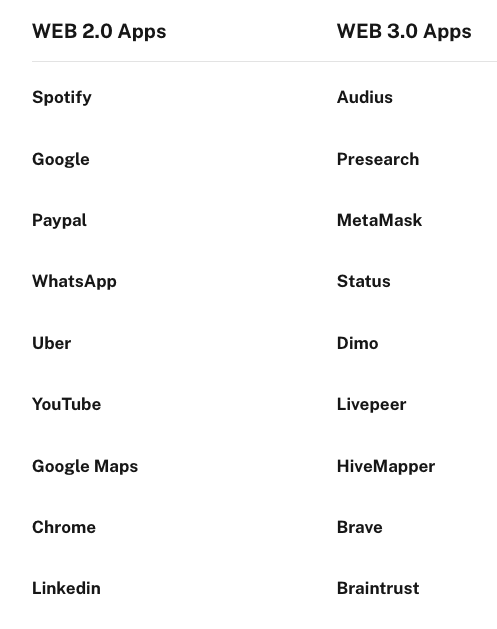
Web 3.0 represents the next evolution of the Internet, driven by decentralized architectures powered by blockchain technology. Unlike Web 2.0, where central authorities dominate, Web 3.0 empowers users by giving them control over their data and digital interactions. This phase integrates artificial intelligence, machine learning, and the Semantic Web to create a smarter, more intuitive Internet. The introduction of token-based economies, such as cryptocurrencies and NFTs, further enhances its decentralized nature, paving the way for new possibilities.
Core Features of Web 3.0 Technology
There are many features of Web 3.0 Technology, here are some of the key features mentioned :
Decentralization
Decentralization is the cornerstone of Web 3.0, enabled by blockchain technology. Unlike the centralized systems of Web 2.0, where data is stored on servers controlled by corporations, Web 3.0 distributes data across networks, giving users ownership and control. This fundamental shift reduces the risk of monopolies and enhances transparency.
Blockchain and Smart Contracts
Blockchain serves as the backbone of Web 3.0, ensuring secure, immutable, and transparent data storage. Smart contracts, which are self-executing agreements encoded on blockchains, enable trustless interactions between parties. These technologies underpin many Web 3.0 applications, from financial services to decentralized platforms.
Semantic Web
The Semantic Web, a key component of Web 3.0, uses artificial intelligence to interpret and process data in a way that is meaningful to users. By understanding the context and relationships between data, the Semantic Web enables personalized experiences and more accurate search results.
Ubiquity
Web 3.0 aims to make the Internet universally accessible across devices and platforms. This seamless integration ensures that users can interact with applications and services regardless of the device they are using, enhancing convenience and connectivity.
Interoperability
Interoperability is another defining feature of Web 3.0, allowing different systems and platforms to communicate and work together. This fosters a more cohesive digital ecosystem, benefiting both users and businesses by breaking down silos and enabling collaboration.
Key Benefits of Web 3.0
Anti-Monopoly and User Privacy
Web 3.0 shifts control from centralized authorities to individuals, reducing monopolistic practices and enhancing user privacy. By leveraging blockchain technology, users can interact without the need for intermediaries, ensuring that their data remains private and secure.
Data Ownership
One of the most significant advantages of Web 3.0 is data ownership. Unlike Web 2.0, where corporations control user data, Web 3.0 allows individuals to own and manage their digital identities. Decentralized platforms enable users to decide how their data is shared and used.
Secure Networks
Web 3.0 provides enhanced security through cryptographic protocols and decentralized architectures. These systems are more resistant to hacking and data breaches, ensuring a safer online environment for users.
Permissionless Transactions
Cryptocurrencies, a key aspect of Web 3.0, enable permissionless transactions without the need for intermediaries like banks. This democratizes financial systems and allows users to conduct transactions freely and securely.
Web 3.0 Examples
Here are the few Web 3.0 examples :
Cryptocurrency and Decentralized Finance (DeFi)
Cryptocurrencies like Bitcoin and Ethereum are prime examples of Web 3.0 technologies. Decentralized finance (DeFi) platforms, such as Uniswap and Aave, demonstrate how financial systems can operate independently of traditional institutions, offering users greater financial freedom and opportunities.
Decentralized Applications (dApps)
Decentralized applications, or dApps, are another hallmark of Web 3.0. These applications run on blockchain networks and are used in various industries, including gaming, finance, and social media. Popular examples include OpenSea for NFTs and Axie Infinity for blockchain-based gaming.
NFTs and Digital Ownership
Non-fungible tokens (NFTs) are a revolutionary aspect of Web 3.0, enabling digital ownership of assets such as art, music, and virtual real estate. By using blockchain technology, NFTs ensure authenticity and uniqueness, opening new opportunities for creators and collectors.
Challenges of Web 3.0 Technology
Scalability Issues
Despite its potential, Web 3.0 faces scalability challenges due to the limitations of current blockchain technologies. Efforts are underway to address these issues through innovations like Layer 2 solutions, which aim to improve transaction speeds and reduce costs.
Energy Consumption
Blockchain networks, particularly those using proof-of-work mechanisms, consume significant amounts of energy. This has raised environmental concerns, prompting the development of more sustainable systems, such as proof-of-stake.
Adoption Barriers
The complexity of Web 3.0 technologies can be a barrier to adoption. Many users lack the technical knowledge required to navigate decentralized systems. Increasing education and accessibility will be crucial in driving widespread adoption.
Future Implications of Web 3.0
Web 3.0 has the potential to reshape industries ranging from finance to healthcare and education. By enabling decentralized systems and personalized experiences, it promises to create a more equitable and efficient digital landscape. Over the next decade, the adoption of Web 3.0 technologies is expected to grow, with governments and organizations playing a pivotal role in shaping its development.