
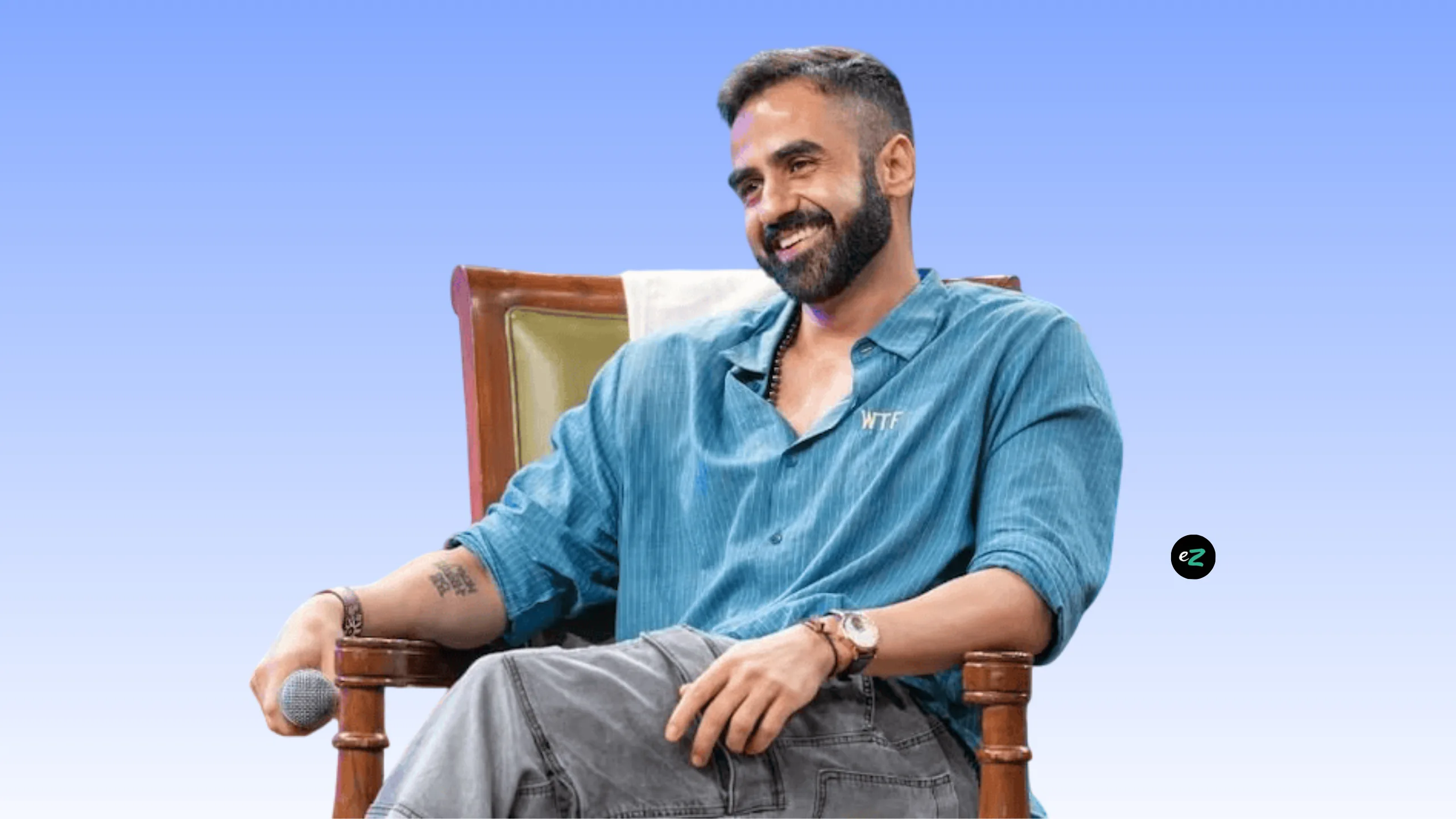
From a 10th-grade dropout working night shifts at a call center to becoming one of India’s youngest billionaire entrepreneurs, Nikhil Kamath story defies every conventional wisdom about success and education. As the co-founder of Zerodha and the mastermind behind India’s trading revolution, he proved that passion, perseverance, and practical intelligence matter more than formal degrees in building transformative businesses.
Who is Nikhil Kamath?
Nikhil Kamath is an Indian entrepreneur and investor best known as co-founder of Zerodha, the discount brokerage he built with his elder brother Nithin Kamath. Beyond Zerodha, he co-founded True Beacon, Gruhas, and WTFund. He also hosts “WTF is” a podcast that has featured guests ranging from Bill Gates to Prime Minister Narendra Modi.
| Companies | Zerodha, True Beacon, Gruhas, WTFund |
| Age | 39 (turns 40 in September 2026) |
| Date of Birth (DOB) | 5 September 1986 |
| Net Worth | Estimated $3.1–3.5 billion (₹27,000–30,000 crore) |
| Education | Dropped out after class 10 |
| Marital Status | Divorced (married Amanda Puravankara, 2019–2021) |
Nikhil Kamath didn’t finish high school. He now sits among a small handful of Indians on Forbes global list of self-made billionaires under 40 and he did it without a single funding round.
Early Life and the Decision to Drop Out
Kamath was born into a Konkani-speaking family in Shimoga, Karnataka. His father, Raghuram Kamath, worked at Canara Bank. His mother ran an event-management business that handled corporate events for large clients. It was a household with exposure to both finance and business operations, though not, by his own account, an environment that made school feel worthwhile.
He left formal education after class 10, around age 14 to 15. He calls the choice not rebellion, but a clear-eyed rejection of a system that didn’t fit how he wanted to learn. Instead of returning to a classroom, he taught himself markets, sales, and business strategy on the job. That path is exactly what makes “Nikhil Kamath education” one of the most-searched facts about him. It runs against the IIT/MBA template so common in Indian startup founder stories.
People also read about Kunal Shah Journey.
From Call Center to Kamath Associates (2003–2010)
His first job was in a call center, selling insurance over the phone on a salary of roughly ₹8,000–8,500 a month. He calls it his real business school: a crash course in persuasion, rejection, and reading people that no classroom could replicate.
With whatever savings he could put aside, he began trading. By his own description, the early years were brutal: he’d wipe out months of gains in a single bad day, over and over. That cycle taught him the lesson he repeats most often in interviews:
“You must never take the market for granted”
As his trading results became known among friends and colleagues, people began asking him to manage their money informally. That demand became Kamath Associates, a partnership with his brother Nithin that managed funds for family and friends before either of them had any formal credentials in finance.
Zerodha: The Flat-Fee Idea That Changed Indian Broking
By 2010, both brothers had watched retail investors get squeezed for years by percentage-based brokerage fees. Frequent trading was expensive, and their answer was structurally simple: charge a flat ₹20 per trade regardless of size, and make money on volume rather than margin.
It’s easy to underestimate how skeptical people were at the time. Convincing customers that low, flat fees were sustainable took real work in the early years. It worked. Zerodha grew into India’s largest retail brokerage by active clients. It now reportedly serves well over 10 million active traders and processes a significant share of the country’s daily retail trading volume. Through it all, the company has stayed debt-free and unfunded by outside venture capital, a genuinely rare structure at its scale.
Trading vs. Investing — Kamath’s Own Framework
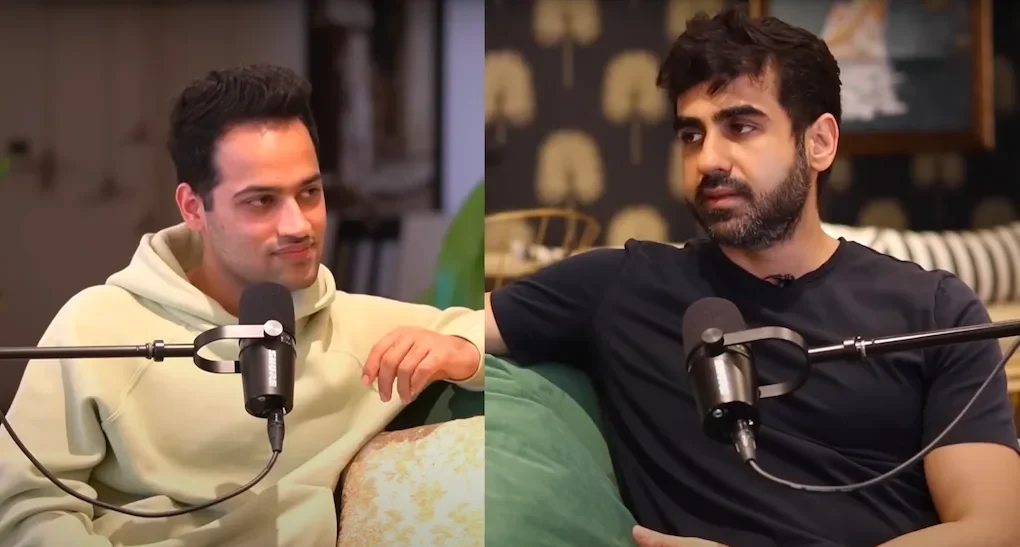
“The best way to learn sales and communication is by doing” – Nikhil Kamath in Raj Shamani Podcast“
Kamath candidly prefers trading himself but recommends investing to most people. He points to figures showing most active traders lose money over time, while long-term investors fare considerably better. His rules for anyone who does trade: always use stop losses, set targets in advance, and ignore tips from TV or SMS, “make your own decisions.”
(Source : Dropout to Billionaire, Raj Shamani Podcast)
True Beacon, Gruhas, and Rainmatter
- True Beacon (founded 2020) manages money for ultra-high-net-worth individuals through privately pooled investment vehicles.
- Gruhas (founded 2021, with co-founder Abhijeet Pai) is an investment firm backing early and growth-stage startups across climate tech, consumer brands, senior care, sustainability, and proptech. It runs two funds : the Gruhas Collective Consumer Fund and the Earth Fund (launched with Brigade Group) and has backed more than 50 companies.
- Rainmatter is Zerodha’s own fintech-focused incubator and investment arm, distinct from Kamath’s personal ventures.
WTFund: Backing Founders Under 25
WTFund grew directly out of the “WTF is” podcast. It’s a non-dilutive grant fund, meaning founders get funding (historically up to ₹20 lakh) without giving up equity, aimed specifically at entrepreneurs aged 25 and under. Beyond capital, it offers mentorship pods, go-to-market support, and access to Kamath’s broader network. Multiple cohorts have run since launch, drawing applicants from smaller cities across India.
The “WTF Is” Podcast and the Modi Episode
Kamath’s podcast has become a genuine media property in its own right, built around long-form conversations with entrepreneurs, investors, and public figures. Its highest-profile moment came in January 2025, when Prime Minister Narendra Modi made his first-ever podcast appearance on the show, a significant earned-media event that pushed the platform well beyond startup-world audiences.
Nikhil Kamath Net worth
Because Zerodha is privately held and doesn’t disclose financials the way a listed company would, published net-worth figures for Kamath vary by source and update date. As of mid-2026, credible estimates cluster between $3.1 billion and $3.5 billion (roughly ₹27,000–30,000 crore), up from earlier 2025 estimates closer to $2.6 billion. His equity stake in Zerodha accounts for the overwhelming majority of this figure. True Beacon, Gruhas, and a personal stock portfolio, which has included stakes in companies like Ather Energy and BlueStone Jewellery, contribute smaller amounts.
Personal Life
Kamath married Amanda Puravankara, a director at Provident Housing, part of the Puravankara real estate family, in a private ceremony in Florence, Italy, in April 2019. The marriage ended in divorce in 2021. Neither party has publicly detailed the reasons for the split.
As of 2026, no confirmed report places Kamath in a remarriage or a publicly acknowledged relationship. Media reports have linked him to Bollywood actress Manushi Chhillar and, more recently, Rhea Chakraborty. Neither Kamath nor either woman has confirmed a relationship, so treat these reports as speculation rather than fact.
He has publicly said he doesn’t plan to have children, framing legacy as something built through work rather than lineage.
The Chess Controversy
In June 2021, Kamath took part in an online charity chess match against five-time world champion Viswanathan Anand, raising funds for the Akshaya Patra Foundation. Chess.com subsequently determined that he had used chess-engine assistance during the match, and the platform suspended his account. Kamath apologized quickly and publicly, calling his conduct “quite silly.” Chess.com restored his account within 24 hours.
The episode remains a rare public misstep in an otherwise carefully managed public image. Kamath handled it with fast, direct acknowledgment rather than deflection, and commentators often point to that response as characteristic of how he manages reputational risk more broadly.
Philosophy: Curiosity Over Credentials
A recurring theme across Kamath’s interviews is a deliberate emphasis on curiosity over formal expertise. Nikhil asks “dumb” questions rather than pretending to already know the answer. He directly connects this habit to spotting the brokerage industry’s inefficiencies in the first place. He credits a willingness to question assumptions everyone else treated as fixed.
He’s also been vocal about financial literacy. He argues that India’s low levels of financial literacy stem from structural gaps in education and income, not individual failure. That view shapes both Zerodha’s educational content initiatives and his broader public commentary.
The Giving Pledge
The Giving In June 2023, Kamath became the youngest Indian signatory of The Giving Pledge, committing to donate at least 50% of his wealth toward causes including climate change, education, and healthcare.
Awards and Recognition
Despite his unconventional background, Nikhil Kamath achievements have earned widespread recognition:
- Forbes World’s Billionaires List (2024) – Listed among India’s 100 Richest with $2.6 billion net worth
- The Giving Pledge Signatory (2023) – Youngest Indian to commit 50% wealth to philanthropy
- Industry Leadership – Co-architect of India’s discount brokerage revolution
- Media Influence – Host of “WTF is” podcast featuring global leaders
- Investment Recognition – Successful exits and portfolio returns through True Beacon and Gruhas.
Key Takeaways
- Education Alternatives Work: Nikhil Kamath proved that passion, practical learning, and real-world experience can substitute for formal education when combined with dedication and strategic thinking.
- Early Career Choices Matter: His call center job provided customer service insights and financial discipline that became foundational to Zerodha success.
- Partnership Dynamics: The successful collaboration with brother Nithin demonstrates how complementary skills and shared values can create business synergy.
- Market Timing and Innovation: Recognizing the opportunity to disrupt traditional brokerage models required both market insight and execution capability.
- Diversification Strategy: Expanding into True Beacon, Gruhas, and media ventures shows how success in one area can enable exploration of related opportunities.
- Character Under Pressure: His response to the chess controversy demonstrated that mistakes can strengthen reputation when handled with honesty and humility.
- Social Responsibility: The Giving Pledge commitment shows how business success can be leveraged for broader social impact
Note : This piece draws on Forbes India rankings, Wikipedia, Chess.com’s public statements, and reporting from Business Standard, Inc42, and Storyboard18 on WTFund. Net worth and valuation figures are estimates that vary by tracker and update date, reflecting Zerodha’s status as a privately held company.
FAQs
Nikhil Kamath’s net worth is estimated between $3.1 billion and $3.5 billion (roughly ₹27,000–30,000 crore) as of mid-2026
Nikhil Kamath is a school dropout, he left formal education after 10th grade at age 14 and never attended college.
No. Nikhil Kamath was married to Amanda Puravankara, a director at Provident Housing (part of the Puravankara Group), from April 2019 until their divorce in 2021. As of 2026, there is no confirmed report of him being remarried.
Born on 5 September 1986 in Shimoga, Karnataka, Nikhil Kamath is 39 as of August 2026 and turns 40 in September 2026.
Nikhil Kamath co-founded Zerodha (2010), True Beacon (2020), and Gruhas (2021), and hosts the “WTF is” podcast.
WTFund is a non-dilutive grant fund founded by Nikhil Kamath for entrepreneurs aged 25 and under, offering grants of up to ₹20 lakh per founder along with mentorship without taking equity. It grew out of Kamath’s “WTF is” podcast and has run multiple funding cohorts.
Nikhil co-founded Zerodha with his elder brother Nithin in 2010, after the two ran Kamath Associates together from 2007. Nithin serves as CEO and is more publicly identified as Zerodha’s technical architect, while Nikhil has focused more on trading, investing, and public-facing ventures like WTFund and the “WTF is” podcast. Both are officially recognized as co-founders, and both appear on Forbes’ billionaires list individually.
2 Comments
Pingback: Nithin Kamath: Age, Net Worth, Wife & the Zerodha Story | eZizz
Pingback: Sridhar Vembu Net Worth, Wife & $1.7B Divorce of Zoho Founder | eZizz