
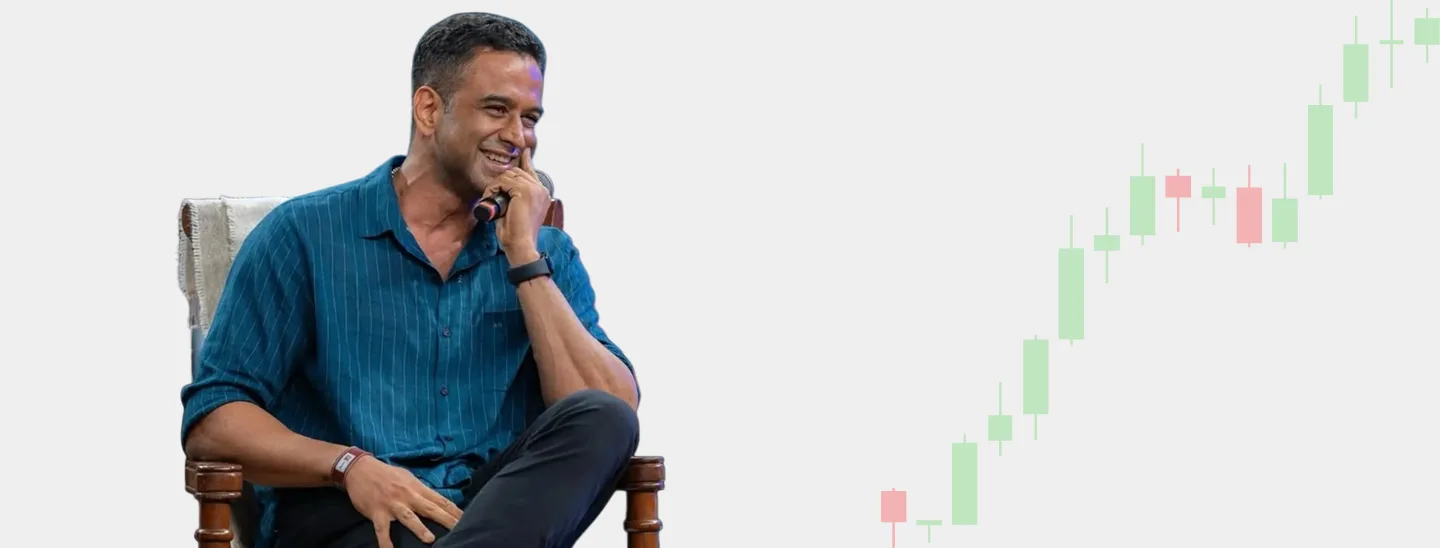
While his younger brother Nikhil became the more visible, podcast-hosting face of the Kamath name, Nithin Kamath is the one who actually built and still runs the business that made them both billionaires. As founder and CEO of Zerodha, India’s largest stockbroker, Nithin went from a teenage trader managing his father’s account to leading a firm that Forbes now estimates is worth close to $8 billion and built without a single funding round.
Who is Nithin Kamath?
Nithin Kamath is an Indian entrepreneur, investor, and the founder and CEO of Zerodha, the discount brokerage he built with his younger brother Nikhil Kamath. He also founded Rainmatter, Zerodha’s fintech-focused fund and incubator, and co-founded True Beacon, an asset management firm for ultra-high-net-worth individuals, alongside Nikhil.
| Company | Zerodha, Rainmatter, True Beacon |
| Age | 46 (as of 2026) |
| Date of Birth (DOB) | 5 October 1979 |
| Net Worth | Estimated $4.7 billion |
| Education | Bangalore Institute of Technology |
| Marital Status | Married to Seema Patil (m. 2008); one son, Kiaan |
Note: Zerodha is privately held and doesn’t disclose financials the way a listed company would, so net-worth figures for Nithin Kamath vary by source and update date. The estimate above reflects Forbes most recent 2026 ranking, which placed him at #852 globally.
Early Life and the Road to Trading
Nithin Kamath was born on 5 October 1979 in Shivamogga, Karnataka, to a Konkani-speaking family. His father, U.R. Kamath, worked as an executive at Canara Bank, and his mother, Revathi, taught the veena. The family relocated to Bangalore in 1996. He studied at Bangalore Institute of Technology.
Kamath started trading in the stock market at just 17, initially managing his father’s trading account. The beginning of a hands-on, self-taught relationship with markets that would define the next two decades of his career. By his own account, he was a below-average student academically, and discovered trading almost by accident rather than through any deliberate plan.
The early years weren’t smooth. In the early 2000s, Kamath borrowed money to trade and blew up his account entirely. Later, then spent four years working in a call centre to pay off that debt, trading on the side the whole time. It was at that call centre that he met his future wife, Seema. He eventually quit the job the moment the first person asked him to manage their portfolio professionally.
Building the Founding Team
From January 2004, Kamath became a franchisee of Reliance Money to start a formal advisory business. The same period during which Nikhil, who Nithin has said was simply the better trader of the two, joined him. With Nikhil handling trading and risk management, Nithin could focus on building the brokerage firm the two of them felt traders like themselves actually needed.
Zerodha’s earliest team had no formal pedigree, no tech background, and no real industry experience — just a shared passion for capital markets. Venu, a friend from the Reliance Money days, took on operations. Hanan, who traded alongside them, took on support. The company’s now-respected engineering culture only began in 2013, when Kailash Nadh (“K”) joined and started Zerodha’s first tech team. A detail Kamath jokes should make the company “FinKech,” not fintech. Karthik joined in 2014 and single-handedly wrote Varsity, Zerodha’s free investor-education platform, which has since become one of the most-used capital markets education resources in the world.
From Call Centre Nights to Full-Time Trader (1997–2010)
From January 1997 to January 2004, Kamath worked as a self-employed proprietary trader. To supplement that income during the lean early years, he also worked nights as a Senior Tele-sales Associate at a call centre from 2001 to 2004 trading by day, working the phones by night.
From 2004 to 2010, he worked as a sub-broker for Kamath Associates, a franchise of Reliance Money, providing portfolio advisory services while continuing his own proprietary trading. That stretch gave him a close, practical view of exactly how badly India’s retail brokerage system was failing ordinary traders the insight that led directly to Zerodha.
Zerodha: Building India’s Largest Brokerage Without a Single Funding Round
In 2010, Kamath co-founded Zerodha with Nikhil. The pitch was structurally simple but genuinely disruptive at the time: a flat fee of ₹20 per trade, regardless of order size, instead of the percentage-based fees traditional brokers charged. For frequent traders, that model made an enormous difference.
What makes Zerodha’s growth unusual isn’t just the pricing model. It’s how the company scaled. Zerodha grew without significant advertising spend and without raising venture capital, a genuinely rare structure for a company at its scale. By 2020, Zerodha reported a self-assessed valuation of approximately $1 billion. Forbes 2026 estimates now put the company’s value at close to $8 billion, with Nithin and Nikhil owning 100% of the privately-held firm between them.
Kamath has been candid in interviews about defending that self-valuation publicly, given how unusual it is for an Indian company to reach billion-dollar status without ever taking outside funding.
That kind of capital discipline isn’t common in Indian tech. Puneet Gupta built Astrotalk into a $1 billion unicorn having raised only around $30–34 million in total funding, a similarly rare exception to the venture-fueled growth playbook most Indian startups follow.
Rainmatter and True Beacon
Beyond Zerodha itself, he has built two additional ventures:
- Rainmatter (founded 2015) : a fintech-focused fund and incubator supporting startups working on financial technology and, more recently, climate-focused ventures.
- True Beacon (co-founded with Nikhil) : an investment management firm serving ultra-high-net-worth individuals.
Zerodha also set up Rainmatter Foundation, a non-profit arm focused on climate change.
Personal Life
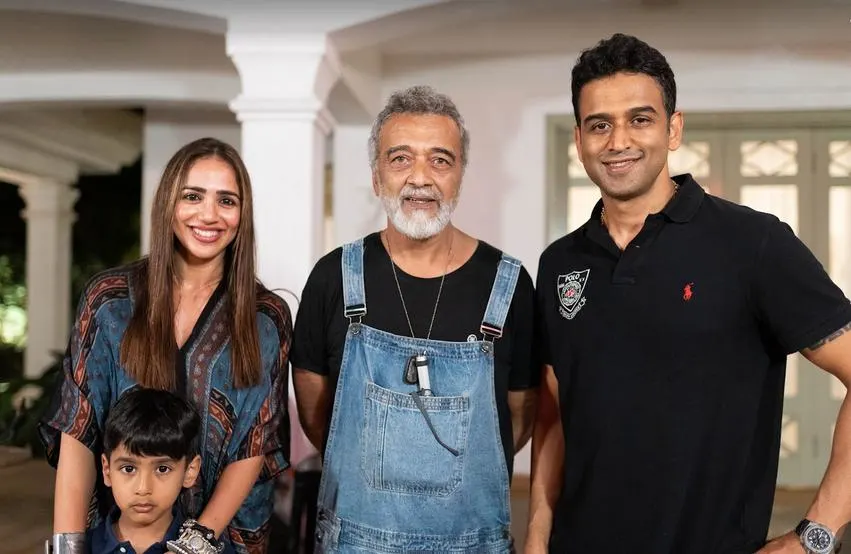
Nithin Kamath married Seema Patil in 2008. They have a son named Kiaan. Seema has spoken publicly about her battle with cancer. She described Nithin’s support through that period.
In a widely shared personal disclosure, Kamath revealed he had a mild stroke in January 2024, which he attributed to a combination of over-exercising, exhaustion, and the stress of his father’s death. A moment that visibly shifted how openly he now talks about health and burnout in interviews.
Outside of work, Kamath has written about playing guitar and singing alongside Kiaan, who plays drums, working out with Seema, and spending time with a close circle of lifelong friends he considers family in all but blood. He also runs, cycles, swims, and plays basketball and poker.
Avoiding the “Unicorn” and “Billionaire” Labels
Kamath has pushed back on how the media frames Zerodha’s success in his own writing. His argument, in short: being labelled a unicorn or a billionaire misses the point. What he considers the company’s actual edge is staying small and nimble enough to focus purely on customer value, rather than chasing revenue, growth, or valuation the way most founders are taught to. It’s a philosophy that directly explains why Zerodha never raised outside funding in the first place.
Awards and Recoginition
- The Economic Times named Kamath among the Top 10 Businessmen to Watch Out for in India (2016)
- Forbes India Leadership Award — Conscious Capitalist of the Year (2019)
- Featured on Forbes Billionaires and India Rich peoples list.
Key Takeaways
- Bootstrapped scale is possible: Zerodha reached a multi-billion-dollar valuation without ever raising venture funding, a genuinely rare outcome in Indian fintech.
- Deep market experience compounds: Nithin’s years as a proprietary trader and sub-broker gave him a granular, firsthand understanding of exactly what was broken in India’s brokerage industry before he tried to fix it.
- Sibling partnerships can work at scale: The Nithin-Nikhil partnership, split between CEO and CFO/public-facing roles, shows how complementary responsibilities can sustain a company through significant growth.
- Openness about setbacks builds trust: Kamath’s public disclosure of his stroke and its causes reflects a broader pattern of transparency that has shaped how the public and Zerodha’s user base perceive the company’s leadership.
Note: This piece draws on Wikipedia, Forbes, Forbes India, CNBC-TV18, The Economic Times, Moneycontrol, Times Now, and Nithin Kamath’s own personal blog (nithinkamath.me). Net worth and valuation figures are estimates that vary by tracker and update date, reflecting Zerodha’s status as a privately held company.
FAQs
Nithin Kamath’s net worth is estimated at $4.7 billion as of Forbes 2026 Billionaires list, primarily derived from his stake in Zerodha, which Forbes estimates is worth close to $8 billion.
Nithin Kamath studied at Bangalore Institute of Technology.
Yes. Nithin Kamath married Seema Patil in 2008. They have a son named Kiaan.
Born on 5 October 1979 in Shivamogga, Karnataka, Nithin Kamath is 46 as of 2026.
Nithin Kamath co-founded Zerodha (2010) with his brother Nikhil Kamath, founded Rainmatter (2015), and co-founded True Beacon with Nikhil.
Nithin Kamath is Nikhil Kamath’s elder brother. The two co-founded Zerodha together in 2010, with Nithin as CEO and Nikhil as CFO.
2 Comments
Pingback: Nikhil Kamath: Age, Net Worth, Wife & the Zerodha Story | eZizz
Pingback: Sridhar Vembu Net Worth, Wife & $1.7B Divorce of Zoho Founder | eZizz