
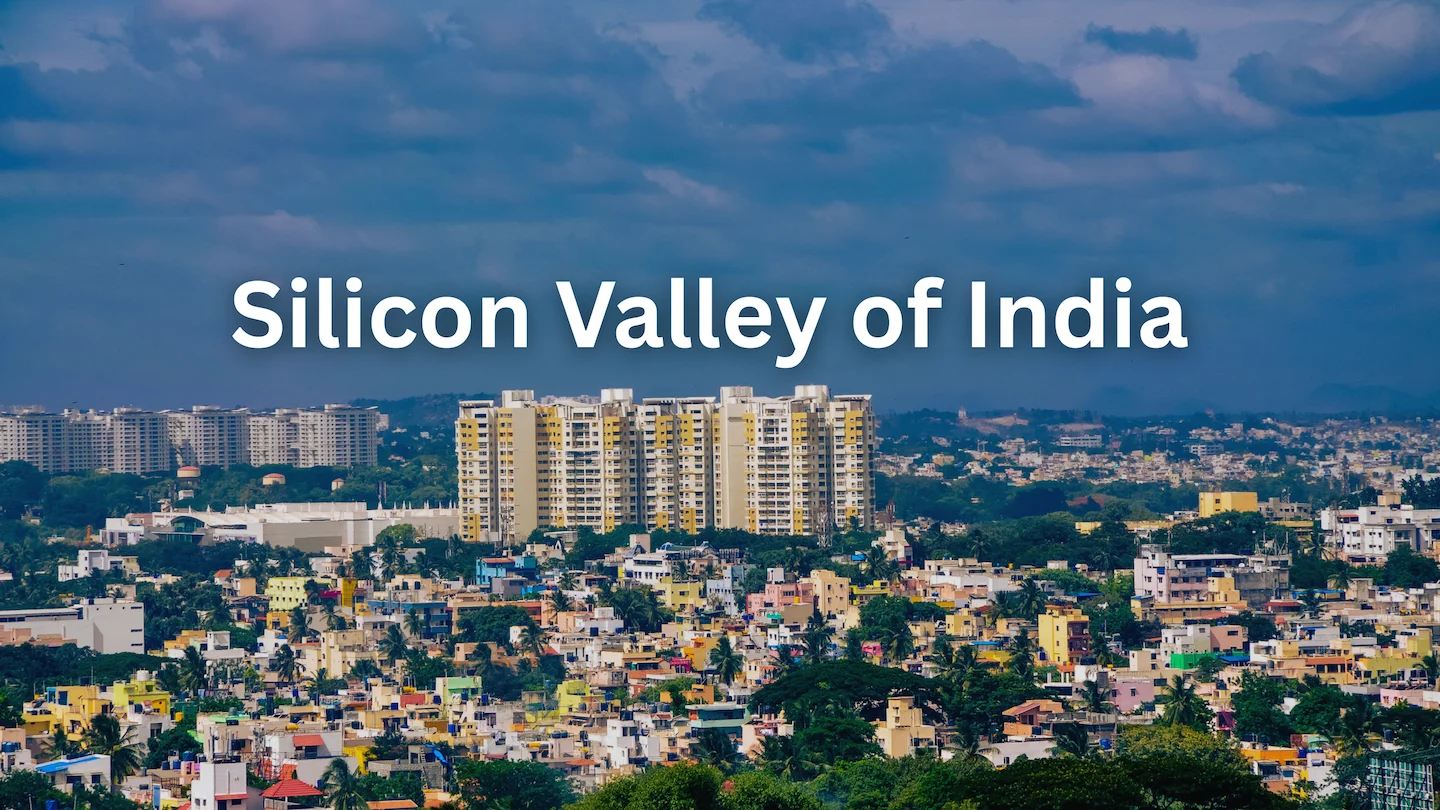
The Silicon Valley of India lives up to its name. Bengaluru has emerged as the crown jewel of India’s startup revolution, anchoring a national ecosystem of 73 unicorns by mid-2025. What sets Bangalore startups apart isn’t just their billion-dollar valuations, it’s the incredible diversity. Startups in Bangalore span everything from fintech giants like Razorpay to AI pioneers like Krutrim, creating an unmatched entrepreneurial ecosystem.
Over 21,600 new startups have been registered this year alone, bringing India’s total to more than 1.8 lakh recognized startups under the Startup India initiative. And while the pace of unicorn creation is remarkable 11 new startups have joined the $1 billion club in 2025 so far, the idea that one emerges every month from Bengaluru alone is more myth than reality.
The city’s role in shaping India’s innovation economy remains undeniable, and it continues to draw the attention of global investors, including Silicon Valley’s biggest names.
The scorecard is staggering:
- 16,000+ active startups (more than most countries)
- 53 unicorn companies valued at $1B+ each
- $185 billion total ecosystem valuation
- 47% of India’s venture capital flows here
- #10 globally in the Global Startup Ecosystem Index 2025
But here’s what the numbers don’t tell you: Behind every statistic lies a story of audacious dreams, crushing failures, and the relentless pursuit of solving problems for 1.4 billion Indians.
People also read about Stand-Up India Scheme 2025
Why Bangalore Became India’s Undisputed Startup Capital
The Perfect Storm of Success Factors
1. The Talent Magnet Effect Walk through any co-working space in Koramangala or Indiranagar, and you’ll hear conversations in six different languages. Engineers from IIT Delhi work alongside designers from NID Ahmedabad, while entrepreneurs from Tier-2 cities pitch to investors who’ve seen it all.
This isn’t accidental. Bangalore attracts over 100,000 tech professionals annually—creating the densest concentration of technical talent in Asia outside of China.
2. The $47 Billion Funding Pipeline Money follows momentum, and momentum lives in Bangalore. With legendary VC firms like Accel Partners, Lightspeed India, and Peak XV Partners (formerly Sequoia Capital India) headquartered here, the city sees 47% of India’s total startup funding.
“Bangalore isn’t just where Indian startups get funded—it’s where global funds come to understand the Indian market,” says Shailendra Singh, Managing Director at Peak XV Partners.
3. The Innovation Infrastructure
- NSRCEL (IIM Bangalore): Graduated 200+ startups with 85% survival rate
- NASSCOM 10,000 Startups: Connected over 3,000 startups to mentors and markets
- C-CAMP: Asia’s largest life sciences incubator
- IISc Research Park: Where deep tech meets commercial viability
4. The Failure-Friendly Culture Unlike traditional Indian business culture, Bangalore celebrates intelligent failure. Second-time founders get funding faster than first-timers—because investors know they’ve learned the hard lessons.
The Unicorn Factory: 53 Billion-Dollar Success Stories
The Hall of Fame
Bangalore doesn’t just create startups—it forges unicorns. These 53 companies aren’t just statistics; they’re economic engines employing hundreds of thousands and inspiring millions.
The Trailblazers:
- Swiggy ($10.7B valuation): Transformed food delivery from luxury to necessity
- Razorpay ($7.5B valuation): Digitized payments for 8 million businesses
- PhonePe ($12B valuation): Processes $1 trillion in annual transactions
- Ola ($6.5B valuation): Revolutionized urban mobility across 250+ cities
- Meesho ($4.9B valuation): Democratized e-commerce for Bharat
The New Guard:
- Krutrim AI ($1B+ valuation): India’s first homegrown AI unicorn, challenging OpenAI’s dominance
- Zepto ($1.4B valuation): 10-minute grocery delivery that redefined “instant”
- Groww ($3B valuation): Made investing accessible to 50+ million Indians
The Multiplier Effect
These unicorns don’t exist in isolation. Each spawns an entire ecosystem:
- Ex-employees becoming founders: Over 2,000 “Flipkart Mafia” alumni have started companies
- Local vendor networks: Swiggy alone works with 200,000+ restaurants
- Talent development: These companies train India’s next generation of product managers, engineers, and leaders
Beyond the Hype: 5 Sectors Defining Bangalore’s Future
1. Fintech: The $100 Billion Opportunity
Bangalore’s fintech revolution goes deeper than digital payments. Companies like Razorpay are building the entire financial infrastructure for India’s digital economy, while Groww is creating the country’s largest wealth management platform.
Key players: Razorpay, PhonePe, Groww, Slice, Jupiter Market size: $150 billion by 2025 Global recognition: 3 of India’s top 10 fintech unicorns are Bangalore-based
2. AI & Deep Tech: The Next Trillion-Dollar Bet
With Krutrim AI leading the charge, Bangalore is positioning itself as Asia’s AI capital. The city hosts:
- 500+ AI startups (2x growth since 2022)
- 15 AI research labs from global giants
- IISc’s AI initiatives producing 200+ PhDs annually
Rising stars: Krutrim AI, Bellatrix Aerospace (space tech), Pixxel (satellite imagery), SigTuple (medical AI)
3. Climate Tech: Solving for Planet and Profit
India’s carbon neutrality goals by 2070 have created a $1 trillion climate tech opportunity. Bangalore leads with:
- Ather Energy: India’s premium electric scooter brand
- Yulu: Micro-mobility solutions for last-mile connectivity
- Ultraviolette: High-performance electric motorcycles
4. HealthTech & Biotech: Digital Health for a Billion
From Biocon’s global pharmaceutical presence to cutting-edge telemedicine startups, Bangalore is India’s health innovation hub. Market opportunity: $50 billion Indian healthcare market going digital
5. Space Tech: From Bangalore to Mars
With ISRO’s legacy and startups like Pixxel and Bellatrix Aerospace, Bangalore is literally reaching for the stars in the $400 billion global space economy.
The Dark Side: When Unicorns Fall and Startups Die
The Brutal Reality Check
Success stories get headlines, but failures teach the hardest lessons. Over the past five years, 5,135 companies shut down in Karnataka—with Bangalore accounting for the majority.
2023-2024: The Great Correction
- 15,900 startup closures nationally in 2023
- 12,700 closures in 2024
- Funding winter: 60% drop in early-stage deals
The Anatomy of Failure
Why promising startups die:
- The Funding Addiction: Companies that raised too much, too early, without proving unit economics
- The Scale Trap: Mistaking growth for progress—expanding before finding product-market fit
- The Governance Crisis: Poor financial controls and founder conflicts (lessons from BYJU’s $22B fall)
- The Competition Crunch: Overcrowded markets with no differentiation
- The Talent Exodus: Key team members leaving for better opportunities
Sector-Specific Casualties
EdTech’s Reality Check: Post-pandemic normalization killed dozens of online learning platforms Quick Commerce Carnage: Ola Dash, Grofers (pre-Blinkit), and others couldn’t crack the unit economics Social Media Struggles: Indian social apps failed to compete with global platforms
The Silver Lining
These failures aren’t just statistics—they’re creating a smarter, more resilient ecosystem. Second-generation founders are building with better fundamentals, and investors are asking tougher questions.
The Investment Ecosystem: Where $47 Billion Flows
The Power Players
Tier 1 VCs (Check sizes: $10M-$100M+)
- Peak XV Partners: Backed WhatsApp, Zomato, Razorpay
- Accel Partners: Early investors in Flipkart, Swiggy, BookMyShow
- Lightspeed India: Portfolio includes Sharechat, VerSe Innovation
- Blume Ventures: Seed-stage specialists with 200+ portfolio companies
Global Giants Making Big Bets:
- SoftBank Vision Fund: $8+ billion invested in Indian startups
- Tiger Global: Aggressive growth-stage investor
- Sequoia Capital Global: Multi-stage investment approach
Recent Mega-Deals (2024-2025)
- Swiggy: $700M pre-IPO round at $15B valuation
- Razorpay: $375M Series F for international expansion
- Krutrim AI: $50M+ seed round—fastest Indian unicorn creation
- Zepto: $200M Series E at $1.4B valuation
The Funding Reality Check
What investors want now:
- Unit economics from Day 1
- Clear path to profitability
- Defensible moats
- Experienced founding teams
- Large addressable markets
The Challenges: Growing Pains of a Startup Superstar
Infrastructure: The $10 Billion Problem
Bangalore’s success is becoming its biggest challenge. Traffic congestion costs the economy $10 billion annually in lost productivity.
The numbers are staggering:
- Average commute: 90+ minutes daily
- Internet downtime: 15% higher than Mumbai/Delhi
- Real estate costs: 40% increase in prime areas since 2022
The Talent Wars
With 16,000+ startups competing for the same talent pool:
- Engineering salaries have increased 60% in three years
- Attrition rates hit 30% in high-growth companies
- Talent acquisition costs now represent 15% of total startup expenses
The Regulatory Maze
Key challenges:
- GST compliance complexity for multi-state operations
- Labor law variations across different states
- Data localization requirements impacting global expansion
- Foreign investment regulations slowing international funding
2025-2030: The Next Chapter of Bangalore’s Startup Story
Mega-Trends Shaping the Future
1. The AI Revolution (Market Size: $500B by 2030)
Bangalore is uniquely positioned to capture India’s AI opportunity:
- Language AI: Building for 22+ Indian languages
- Enterprise AI: Automating India Inc.’s digital transformation
- AI Infrastructure: Chips, cloud services, and specialized hardware
2. Climate Tech Explosion
India’s $1 trillion climate commitment creates massive opportunities:
- Electric mobility: 30% of vehicles by 2030
- Renewable energy: 500 GW solar/wind capacity
- Carbon markets: $100B opportunity by 2030
3. Deep Tech Commercialization
IISc and other research institutions are spinning out breakthrough technologies:
- Quantum computing startups
- Advanced materials companies
- Biotech innovations
- Space technology ventures
4. The Distributed Future
Hybrid operating models: Bangalore HQ + distributed teams across Tier-2 cities for cost optimization and talent access.
The Global Ambition
Bangalore startups are no longer content with just the Indian market. The next wave of unicorns will be:
- Global from Day 1
- AI-first in approach
- Sustainability-focused
- Emerging market specialists
Success Playbook: How to Build a Winning Startup in Bangalore
The New Rules of the Game
1. Prove Unit Economics Before Scaling
- Customer Acquisition Cost (CAC) < 3x Customer Lifetime Value (LTV)
- Gross margins above 70% for software, 20%+ for commerce
- Monthly burn rate justification for every rupee spent
2. Build Revenue, Not Just Users
- Focus on paying customers from Month 1
- Diversified revenue streams to reduce platform risk
- Predictable recurring revenue models preferred
3. Leverage Bangalore’s Unique Advantages
- Tap into the alumni networks of successful companies
- Utilize government incentives (Karnataka Startup Policy 2022-2027)
- Access world-class mentorship through incubators
- Build for global markets with local insight
4. Plan for the Long Game
- 18-24 month runway minimum before fundraising
- Strong governance practices from Day 1
- Diversified founding team with complementary skills
- Advisory board with industry veterans
The Ecosystem Advantage
What makes Bangalore special:
- Peer learning networks: Regular founder meetups and knowledge sharing
- Customer proximity: Enterprise clients and consumer segments co-located
- Regulatory support: Karnataka government’s startup-friendly policies
- Global connectivity: Direct flights to Silicon Valley, London, Singapore
The Verdict: Why Bangalore Will Remain India’s Startup Capital
The Compound Effect
Success breeds success, and Bangalore has achieved critical mass. With each unicorn created, the ecosystem becomes stronger:
- More experienced talent enters the market
- Better investor networks get established
- Deeper mentor pools guide new founders
- Stronger support infrastructure gets built
The Global Recognition
International validation continues to pour in:
- Google’s largest R&D center outside the US
- Microsoft’s AI research hub
- Amazon’s largest software development center
- Uber’s global engineering center
The Next Decade Prediction
By 2030, Bangalore will likely have:
- 100+ unicorns (nearly doubling current count)
- $500+ billion ecosystem valuation
- 50,000+ active startups
- Position among global top 5 startup hubs
Conclusion: The Startup Revolution Continues
Bangalore’s transformation from a sleepy pensioner’s paradise to a global startup powerhouse isn’t just an Indian success story—it’s a blueprint for how emerging markets can compete with established tech hubs.
The city faces real challenges: infrastructure bottlenecks, rising costs, and increasing competition from other Indian metros. But its fundamental advantages—world-class talent, deep capital pools, supportive ecosystem, and culture of innovation—remain unmatched.
For entrepreneurs, the message is clear: Bangalore offers the highest probability of startup success in India. For investors, it represents the best risk-adjusted returns in emerging markets. For policymakers worldwide, it’s a masterclass in building innovation ecosystems.
The next chapter of India’s startup story is being written in Bangalore—and it promises to be even more remarkable than what came before.